The employee of tomorrow: analytical skills to grow in importance, team player skills to diminish
3 December 2018
Managers believe employees of the future will need greater data and risk analysis skills, and become more strategic thinkers
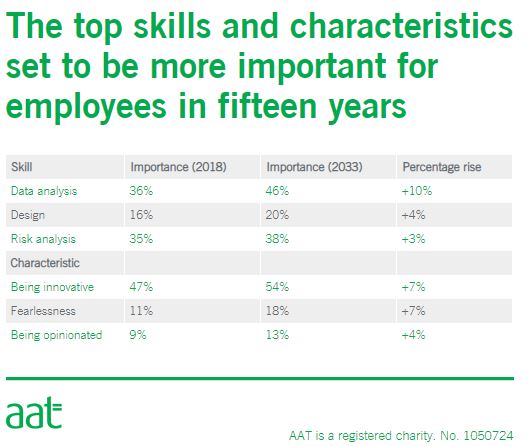
Being fearless, innovative, and opinionated will all become more important characteristics in the future worker
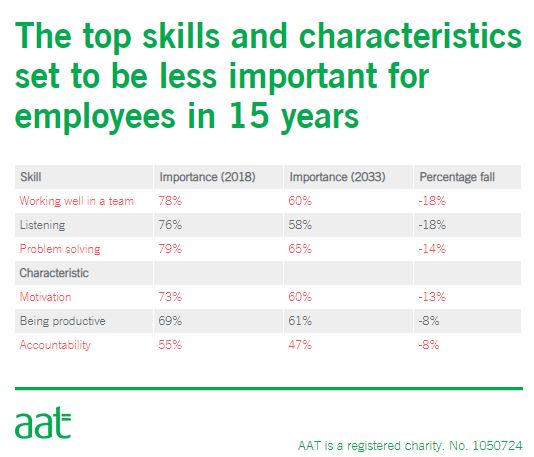
Listening skills, teamwork and motivation set to fall in importance as employees move to flexible working solutions over next 15 years
Analytical skills including the ability to be a strategic thinker, data analysing and risk analysis are all set to be strong skills requirements for the job specifications of tomorrow’s employee, according to a new YouGov study commissioned by AAT (Association of Accounting Technicians).
YouGov spoke to 1,000 senior decision makers across all industries about the skills and characteristics that were most required in today’s workplace, and which of these would rise or fall in importance over the coming fifteen years.
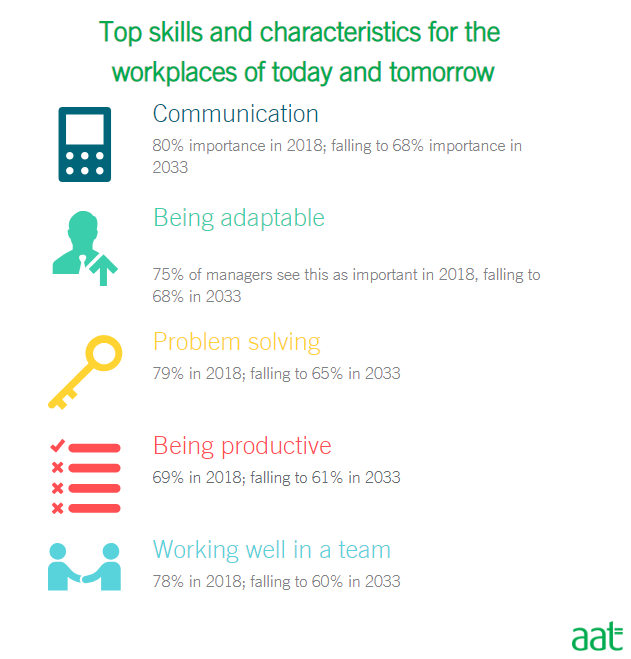
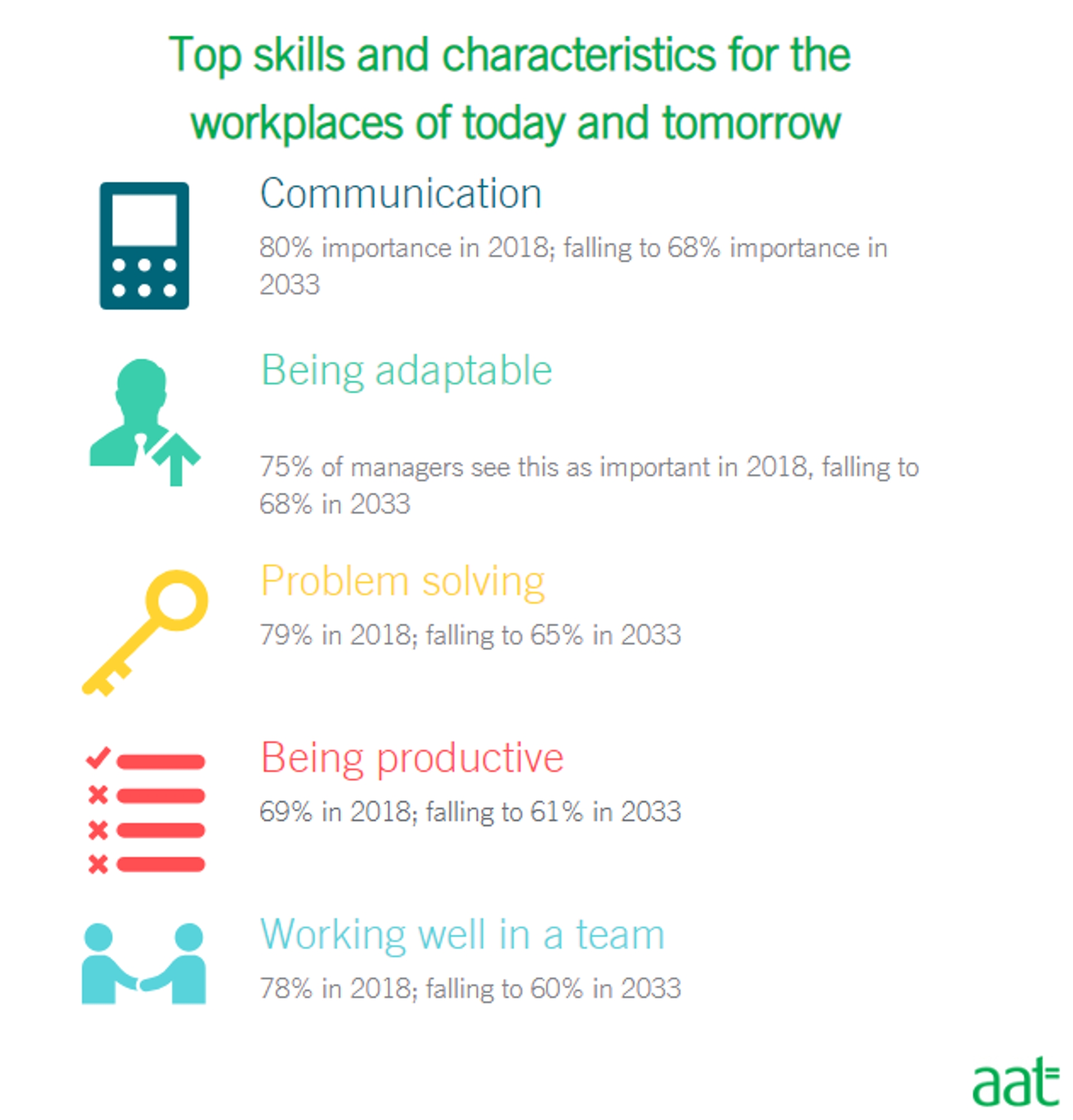
And while skills including the ability to communicate (80% today/68% in 2033) and problem-solving (79%/65%); along with characteristics such as being adaptable (75%/68%) and being proactive (66%/59%) are perceived to be important now and in the future (if falling somewhat in importance), other skills including being a data analyser (36%/46%) and ability to design (16%/20%), offering advice in a consultancy capacity (14%/16%) and strategic thinking (51%/52%), along with characteristics such as being innovative (47%/54%) and fearlessness (11%/18%) appear set to accelerate in importance.
Mark Farrar, Chief Executive, AAT said:
If the decision makers we spoke to prove correct, then employees will need to better develop their data analysis skills over the coming years if they wish to charm their potential future workplace’s recruiters.
The rise in importance of skills such as being a consultant and strategic thinking shouldn’t come as a huge surprise when we look at recent office evolution. When computers accelerated in use in the workplace for example, many people thought that this would lead to the decline of accountants and bookkeepers. However, automation has removed more mundane manual tasks, freeing them up to concentrate on the more interesting and added value areas of accountancy such as the production of management information and trend analysis.
Fall in office working sees ‘team playing’ drop in importance
While certain skills and characteristics will rise in the future, managers also reported that others would be less favourably looked upon due perhaps to the rise of artificial intelligence and flexible working leading to less employees actually being needed in the office.
Working well in a team (78%/60%), listening (76%/58%) and (perhaps worryingly) behaving ethically (56%/51%) were among skills that are seen as holding diminished importance in a decade from now, while motivation (73%/60%), accountability (55%/47%) and being productive (69%/61%) were the top three characteristics that will be moved away from in tomorrow’s business world.
Mark Farrar added:
It’s disappointing to see the rate at which managers feel that teamwork may diminish in the future, which can probably be attributed to the rise of automation leading to employers working more flexibly and having less ‘team’ interaction. Successful businesses are always about people and teams, so it’s my firm belief that this aspect of working life will retain significant importance. It will be fascinating to see what actually unfolds over the coming years.
AAT has produced a short white paper looking at the role of the future accountant and the impact of technology on the profession. To access this, please visit the AAT website.